Living with a radon system takes very little work. Look at the gauge once a month, test the house at least every two years, keep the fan running, and expect to pay for a new fan at some point. The gauge tells you the fan is pulling suction. Only a test tells you your radon level.
EPA’s Consumer’s Guide (2025 cover) says: “Similar to a furnace or chimney, radon reduction systems need occasional maintenance.” Here is that upkeep in the order most owners need it, with the full guide for each step. For how the whole thing fits together, read how a mitigation system works. Radon Handbook sells nothing and refers no one.
Step 1: Know what normal looks like
A radon fan is a small sealed fan on a pipe. It runs day and night, pulling air from under the house and sending it outdoors, usually above the roof. Normal means little or no noise indoors, a gauge close to the number marked at installation, and a slightly higher electric bill. Our guide to what a radon fan does and what’s normal goes through each of those.
EPA says the fan “must not be located in or below a livable area”. If it’s in a basement, don’t move it, but do raise it with a credentialed mitigator, the trade’s word for a radon system installer.
And leave it on. In EPA’s words, “the fan should NEVER be turned off; it must run continuously for the system to work correctly.”
Step 2: Learn to read the gauge
The usual gauge is a U-tube manometer, a small tube of colored liquid on the pipe. Pennsylvania DEP puts it simply: “The fan is running if the levels of fluid on each side of the glass tube are uneven.” Minnesota’s owner form (October 2023) adds the limit: the gauge “does not show or measure radon levels, rather it shows there is suction in the pipe.”
No EPA or state source we read gives a target number, and higher isn’t better. What counts is today’s reading against the start-up reading, often on a sticker beside the gauge. Minnesota says a reading “significantly different” from that mark means the system may not be working properly, without saying how far is too far. Our guide to reading a radon manometer goes step by step, including why you should leave the zero alone.
A U-tube only helps if someone looks at it. EPA’s guide accepts one warning device, while the installer standard, ANSI/AARST SGM-SF-2023, asks for a gauge and an active alert on new or altered systems, and Minnesota requires both. Keep checking the gauge even if you have one: one battery alarm waits 48 hours by default and reacts only to a drop of 90% or more.
Step 3: Keep a simple routine
Minnesota’s form applies to systems there, but it’s the most complete owner’s plan we read.
| Task | How often | Whose advice |
|---|---|---|
| Compare the gauge with its marked reading, and check any alarm’s power | Monthly | Minnesota’s form. EPA’s Q&A (updated 23 June 2026) says “on a regular basis” |
| Test the house for radon | At least every 2 years, preferably in the heating season | EPA, Pennsylvania and Minnesota |
| Test after a change to the house or system | When it happens | Minnesota and EPA |
| Check joints, mounts, vibration and suction | Yearly | A maker’s guide, written for installers |
Our radon system maintenance calendar adds what you can check from the floor, how long a system lasts and a one-page record to keep. Some installers say you need a yearly service visit, and they also sell those visits. For a fan system, we found no federal or state rule requiring one, though we didn’t read every state’s.
EPA asks for a yearly professional check of a heat recovery ventilator. A passive system has no fan, so there’s no manometer to read and the test is your only check.
Step 4: When something changes
Go by the gauge before the noise. If the reading still matches the mark, the fan is still making suction.
| What you notice | First move |
|---|---|
| Fluid level on both sides, or well away from the mark | Check that the small tube is connected and not kinked and that the fan has power, then call your installer |
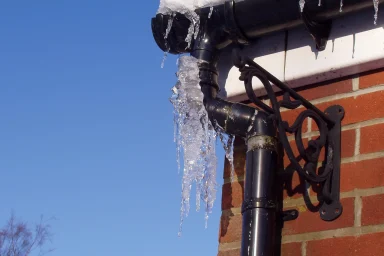
| Fluid level in a long cold spell | Possibly ice in the pipe. Call your installer and stay off the roof |
| Alarm beeping or flashing | Read its leaflet, since some signals mean only a low battery. Otherwise treat it like a level gauge |
| Fan starts and stops by itself | It may be overheating. Call before touching the switch, because sources conflict when water is the cause |
| New noise, reading unchanged | Find the sound and raise it with your installer |
Our checklist for a noisy or stopped fan takes these one at a time, sound by sound. Stop at the owner checks: the maker’s guide in the table above says there are no user-serviceable parts, that a licensed electrician does all wiring, and that a fan shouldn’t sit on the pipe without power for more than 48 hours.
Step 5: Replace the fan when it fails
EPA’s guide says fans “may last for five years or more”, and its 2025 cost analysis assumes a replacement every 10 years as a modelling input. No agency we read tells owners to swap a working fan at a set age.
EPA’s Q&A puts a new fan at “around $200 – $350 including parts and labor”, with no year or method given. Its analysis uses $476 in 2023 dollars and doesn’t explain the gap. Our guide to replacing a radon fan covers the warranty, who may legally do the work and how to match a fan. A fan that fits the pipe may not match the suction: one maker’s current manual lists two fans of the same size and inlet with limits of 0.7 and 1.7 inches of water column, the unit on most gauges.
Step 6: Budget for the running cost
EPA says fan systems “will slightly increase your electric bill.” At EIA’s US residential average of 18.16 cents per kWh (August 2026, a preliminary summer-month figure), a 20-watt fan comes to about $31.82 a year, a 72-watt fan $114.54 and a 140-watt fan $222.71, if each runs all year at that wattage. Put your own watts and state into our radon fan running cost calculator.
Add a share of a future fan and your retests, and a 72-watt fan at that rate comes to about $144.54 to $199.54 a year. Our assumptions there are a $200 fan lasting 10 years with a $20 test kit, up to a $350 fan lasting 5 years with a $30 kit. Neither total counts a service call or the heated or cooled air the system pulls out of the house, which EPA says varies by climate, system and home.
Step 7: Protect the pipe
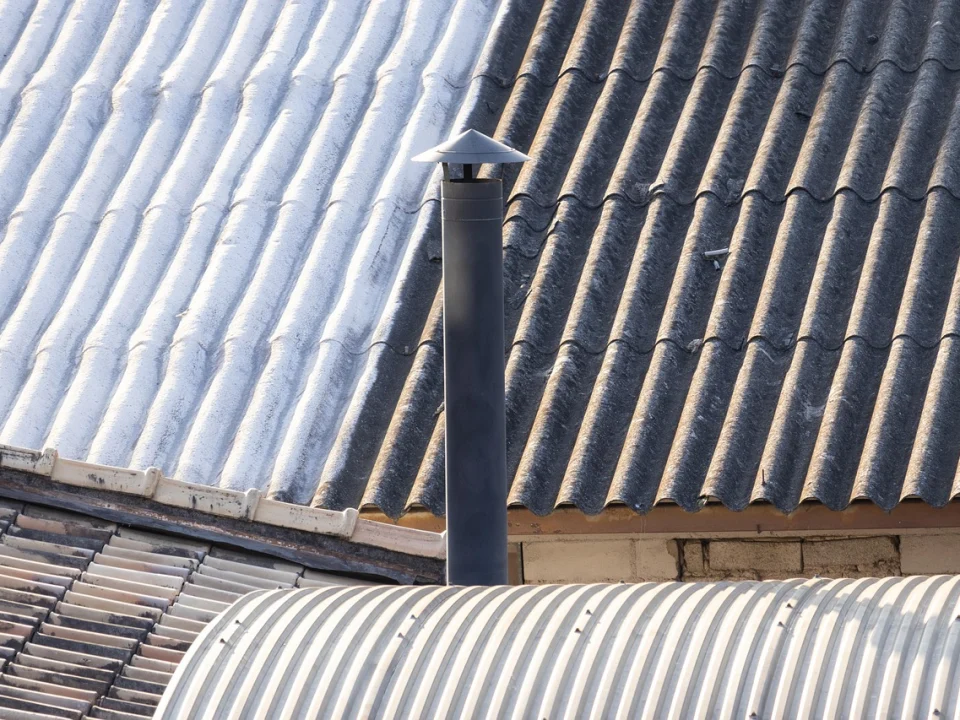
Under EPA’s guide and the national standard, a pipe generally has to end outdoors, pointing up, at least 10 feet above the ground and above the roof edge, away from windows. Details change by state: Pennsylvania and Illinois ban rain caps outright, while the national standard allows one in limited cases. Our page on radon pipes and vents sets the rules side by side and gives you a check you can do from the ground.
Day to day, the job is to leave it alone. Tell any plumber, roofer or remodeler that it’s a radon pipe and shouldn’t be moved or cut. Never close the pipe to stop noise, water or cold air. Taking on a system with no records? See buying a house with a radon system.
What EPA says to do next
EPA’s Consumer’s Guide gives owners two lines:
Later on, if your monitor shows that the system is not working properly, call a contractor to have it checked.
It is a good idea to retest your home at least every two years to be sure radon levels remain low.
If it’s been more than two years, or you don’t know when the house was last tested, start with how to test for radon, then put your number into our radon test result reader for EPA’s next step. Minnesota says a home with a system that tests at 4 pCi/L (picocuries per liter, the US unit for radon in air) or higher may need more work. That’s EPA’s action level, a decision point and not a safety line: EPA’s Citizen’s Guide (2025 cover) says levels under 4 “still pose a risk”.
When you next talk to your installer, ask:
- What was the start-up reading, and where is it recorded?
- Does the system have an active alert as well as the gauge?
- Which parts and labor are still under warranty, and does the warranty transfer?
This page is general information, not medical, engineering or legal advice. Prices are dated examples, not quotes.
Sources checked on 4 November 2026.